Showing posts with label The Internet. Show all posts

Friday, November 20, 2009

Have You heard?

It is a ripe Rhode Island morning. Three-Fourths of the Griffin men are present at the kitchen table. Dog and writer/actor Brian begin to read the Quahog Informant. Peter, father and head-of-the-household asks Brian to view said periodical. As Peter flips through the Informant he confusingly grunts into the paper. Peter inquisitively asks about the absence of an important piece, which he had thought to be missing from his periodical.

Concerned, Brian asked Peter for further explanation. Peter claims:
“Well there seems to be an absence of a certain ornithological piece; a headline regarding mass awareness of a certain avian variety.”
Inquisitively, Brian wonders what Peter is talking about, Stewie, Peter’s baby, then quickly warns Brian to not be so inquisitive. Suddenly, Peter jumps up from his chair and with an animated glaze in his eyes, starts metrically pumping his arms up-and-down. As Brian stares questioningly in Peter’s direction, Peter begins to clarify that,
“Oh, well a bird-bird-bird. B-bird’s is the word. Brian! Don’t you know about the bird? Well Peter’s gonna tell you about the bird! Oh, well a bird-bird-bird. B-bird’s is the word. Surfi-“
Suddenly, in the midst of his explanation, Peter starts to experience what seems like a seizure. He cannot speak clearly, and muscle spasms are overtaking his regular bodily movements. Peter suddenly falls to the floor, shakes and vocalizes uncontrollably. After a few moments, he takes a deep breath, and falls lifeless onto the tile floor. As drool is foaming out of the side of his mouth, Brian rushes over to help. Flabbergasted, Brian asks if Peter is all right. In the middle of his inquiry, Peter wakes up to finish his explanation.
“Bah-pa-pa Ooh-mow-mow, Bah-pa Ooh-mow-mow, Bah-pa-pa Ooh-mow-mow, Bah-pa Ooh-mow-mow, Bah-pa-pa Ooh-mow-mow, Bah-pa Ooh-mow-mow, Bah-pa Ooh-mow-mow!”
As Brian stares blankly at Peter rhythmically pumping his arms up-and-down, Stewie pulls a revolver from his baby jumper and proceeds to put the barrel in his mouth. Although he did not succeed in taking his life, these actions show that songs that are repetitive in nature can ultimately cause an individual to want to inflict bodily harm on himself or others.


(Parry, I chose to focus on a scene from Family Guy instead of a movie. I hope you can understand:)

Monday, November 9, 2009

Who does Facebook own?


You? Me? My dog?


Okay, Facebook doesn't technically own any of us. If we want to get philosophical, we can say nobody really owns anything. We can even look at the meaning of ownership, and what it really means to own or be owned. But don't worry, we won't delve that deep into our metaphysical reality.


As it stands currently, under the current privacy policy, Facebook calls itself "...not just a website ... It is also a service for sharing your information on Facebook-enhanced applications and websites." Facebook gives its users the power to control how the information is shared through the application settings. And, at first glance, this could mean that the users own the information presented on the website; however, some think this isn't the case.


As of February 4th, 2009, Facebook installed a new Terms of Service. In this new TOS, Facebook removed the guarantee that any deleted content will be deleted forever. Or, in the words of Chris Walters of The Consumerist, "[Facebook] Can Do Anything We Want With Your Content. Forever." Shortly after the release of those TOS were released to the public, users became upset and Facebook chose to revert back to its old TOS. As it stands currently, Facbook insists that "You own all of the content and information you post on Facebook, and you can control how it is shared through your privacy and application settings." I believe this is the way it should be.


I see Facebook as a platform to socialize, upload and share memories and experiences through digital content. Whatever users post should be seen as users' property both in a legal sense and ethical sense. If this trust between platform and user is breached, it could mean the end (or the steep decline) of Facebook's popularity.

Wednesday, October 28, 2009

Honey is as Delicious as Wikipedia is Informative


I've always believed honey has medicinal properties. I've sipped honey when I suffered a sore throat, I have rubbed honey into burns, and of course, I have dripped honey over my English muffins. My love for this serum inspired me to read up all about honey, on Wikipedia of course. I poked through Wikipedia's entry on honey, and I saw nothing about its medicinal traits, so I decided to add it in, so that others could share in this useful knowledge.

Under the Hitsory, Culture and Folklore section, I added that "Some cultures believe honey has many practical health uses. It was used as an ointment for rashes and burns, and used to help soothe sore throats when no other medicinal practices were available." I personally agree with this statement, and I wish other to try it as well, unless their allergies don't allow them to!

Update: Even a week and a half after updating the page, my entry has not been edited. I am surprised by this because although I feel this is useful information, I have no legitimate citations to back up my cause. However, my entry is quite minimal, and under a wiki page that probably isn't visited so often, so I can see how it has gone unnoticed.

Update #2: Even after a month and a half (and my confession via this blog) my wikipedia entry still hasn't been edited or deleted! Cool!

Monday, October 12, 2009

Twitter: Simple, or for the Simple?


How can a company be so popular and still have no discernible revenue? Social networking and communication was revolutionized by the birth of Twitter. It's so simple, its a wonder why nobody came up with it before. Twitter asks its users the question, "What are you doing?" and limits their responses to a mere 140 characters. The engine is completely free to the public; users can even download their logo in three different formats, practically welcoming surfers to take, edit, and share their image. According to their website, Twitter has about 30 employees, and 25 open positions at their corporate office. If Twitter is used so frequently, and is so well liked why isn't the company banking? To answer this question for myself, I went directly to Twitter.

As I began clicking around the website, I came to the About Us section, which posed frequently asked questions. To my surprise, here was the very question I came asking myself: "How do you make money from Twitter?" Twitter's response:
Twitter has many appealing opportunities for generating revenue but we are holding off on implementation for now because we don't want to distract ourselves from the more important work at hand which is to create a compelling service and great user experience for millions of people around the world. While our business model is in a research phase, we spend more money than we make.

Interesting enough. Their desire for "not wanting to distract themselves from more important work" puts Twitter in an almost heroic light. Since the boom of the internet, more and more websites have been turning to advertising for vast amount of revenue. So why is Twitter not buying into all of this? I think Twitter is waiting until they gain even more popularity so that they can sell space on their website, or even a portion of their website like Facebook did back in 2007.

And what is this "research phase" their business model is in? Isn't it obvious how to make money off the internet? Websites and search engines have been doing it for years. I think by "research" they really mean they are waiting to see where people take Twitter as a social utility. They are waiting to see how much popularity the engine can gain and how much speed it picks up amongst internet users, for both of these factors enormously affect the most practical type of advertising to implement.

Maybe what Twitter is doing isn't so bad. When Facebook sold a tiny bit (1.6%) of their website to Microsoft for a mere $250 million, the total value of Facebook was estimated to be $15 billion, keeping the interest of advertisers and software companies buzzing about what Facebook was going to do next. If Twitter plans to follow the same model, it could be pan out to be a grossly lucrative decision.

Tuesday, September 29, 2009

Is the Internet Still Making Us Stupid?

Nicolas Carr argues that the internet is diminishing our intelligence. He states that our use of the internet fails to foster analytical reading skills. Even Scott Karp, a blogger of online media states that he no longer reads books. Carr deduces that internet causes "our ability to interpret text, to make the rich mental connections that form when we read deeply and without distraction, remains largely disengaged."

In the article, Carr also describes a time when Friedrich Nietzsche was getting old and his vision was failing; it hurt badly to continuously stare at a page while writing, and he was afraid he may have to give it up for good. Nietzsche then bought a typewriter. As soon as he mastered the art of typing, he was able to do so with his eyes closed, and thus his vision was not strained. However, one of Nietzsche's colleagues noticed a change in his writing style. Carr states that Nietzsche's "already terse prose had become even tighter, more telegraphic. “Perhaps you will through this instrument even take to a new idiom,” the friend wrote in a letter, noting that, in his own work, his “‘thoughts’ in music and language often depend on the quality of pen and paper.” Here, Carr is trying to make the point that the typewriter had something to do with his change in writing style. But what if it was merely due to Nietzsche just becoming old and crotchety?

Carr also argues, “As we come to rely on computers to mediate our understanding of the world,” he wrote, “it is our own intelligence that flattens into artificial intelligence.” But weren't we who came up with artificial intelligence in the first place? Technology alone has feathered into something today which nobody could predict 50 years ago.

As deduced from Carr's arguments, he is arguing that the internet has a tendency to take away from our reading and writing skills. This may very well be the case, but are reading and writing skills the only reflection of intelligence? In an article featured in Discover magazine, author Carl Zimmer provides a counter argument to Nicholas Carr; that the internet (and other forms of communicative media) are actually increasing our neurons' functionality. Zimmer cites linguist David Crystal's new book Txtng: The Gr8 Db8:

In his new book, Txtng: The Gr8 Db8, the English linguist David Crystal demonstrates that many of the dire warnings about texting are little more than urban legends. Texting doesn’t lead to bad spelling, he finds. In fact, Crystal writes, “texting actually improves your literacy, as it gives you more practice in reading and writing.”

The internet should really just be seen at as a tool, not a black hole which sucks away our intelligence. It increases our productivity, our social networking options and abilities, it allow us for further access to both information and opinions of objective parties, it gives us maps, definitions, recopies, you name it, its probably available on the web. In my opinion, Carr's argument is null and void. Merely because the information is convenient, doesn't mean it has to make us stupid or uninterested.

Sunday, September 27, 2009

Thank God for Nancy Pelosi?


Nancy Pelosi, Speaker of the House, recently made commented on FCC Chairman Julius Genachowski's announcement concerning a free and open internet. Genachowski's stance on the issue of Net Neutrality favors the FCC's limitation of Internet Service Providers. He believes that the power of controlling who sees what on the internet should not be in the hands of the service providers, but in the FCC's. Pelosi wants to preserve the openness and freedom of what is the internet; she defines her position of the Net Neutrality bill to the House as in accordance with Genachowski's.

The bill would prevent internet service providers from acting as "traffic cops" on the net. The purpose of the bill was not to control and regulate the internet, but rather lay down rules to keep online engagement fair and equal for all users.

Sadly, on September 27, the bill was rejected by congressional leaders. The 269-152 vote fell largely along party lines. Ultimately, it was the Republican party which provided the majority of the distaste for the bill.

This video explains that informational media has taken a turn from social to privatized. Newsprint, radio, and even television were somewhat interactive in their beginnings. A printing press was moderately priced for their day (~$40,000 in our time), people could broadcast anything via the radio, and television used to be free to anyone with an antennae. All of these personal freedoms and opportunities for free speech have been stripped away from us by our governing bodies. Now we have the internet; a melting pot of ideas and opportunities, and we are being threatened with the removal of this as well? Why does anybody have to control the internet? Why do we have to turn such an awesome tool into a capitalistic money-generating source of revenue for ISP's?

The internet has become such an integral part of our lives to change is or charge for it may disrupt the good thing we have going.

Monday, September 21, 2009

Groupthink in the Internet and Politics


Groupthink was a term coined by William H. Whyte in 1952 in Fortune Magazine and studied by Yale Psychologist Irving L. Janis. It is a term used to describe a type of behavior exhibited by a group of individuals who reach a consensus without adequate evaluation and analyzation of the problem. Individuals in groups generally do this to avoid conflict; however, groupthink discourages individuals to bring up ideas outside of the comfort level of consensus thought. This cohesive nature causes individuals to loose aspects of creativity, individuality and uniqueness; thus, this may cause groups to make quick and dirty decisions for fear of not doing so may disrupt the group's homogeneous equilibrium.

The internet can be utilized to decrease these aspect of groupthink, especially in politics. The sheer amount of communicative abilities and opportunities on the internet are innumerable. In the past, without this ease of communication, rumors could be started by one group and spread until it turns into a group consensus, potentially ruining a campaign or particular platform and individual subscribes to. The internet can be used to reach individual members of a group and fight any inconsistencies and errors in communication any party may be partaking in. Barak Obama used the Net to fight rumors he was Muslim and to organize and facilitate fundraisers for his campaign.

The cool thing about the internet is that campaigns like Obama's can reach out to individuals and it will seem as though the campaign is making an effort to connect with that individual on a more personal level (more so than, say receiving an ad in the mail). This can help the campaigns recruit individuals who may not otherwise get involved with politics. It can also eliminate the potential of groupthink. Most of the communicating we do on the internet involves our identity in one way or another, but a lot of it doesn't have to. This is where the concept of groupthink is completely thrown out. Who would hesitate sharing an opinion when there is no group equilibrium to offset? The elimination of group think can aid a democracy. It gives individuals more voice and it can allow politicians to gain access to the opinions of their constituents.

Article 1: Examiner.com
Article 2: CNN.com

Tuesday, September 15, 2009

THE INTERNET IS KILLING MY CHILDREN


Not really, but according to Matthew Moore's article in Telegraph there are fifty things (and counting) that are being killed by the internet. While reading this article, a few things came to mind that weren't mentioned in the article.

The internet is killing print periodicals. Moore mentioned something of the sort when he pointed out "hard-core pornography on the web has put an end to one of the most dreaded rites of passage for teenage boys..." He has a good point here. Not to mention, the convenience, and plethora of information available on the internet has decreased our need for news periodicals and has ultimately caused a decline in the popularity of print media.

YouTube and other video media (and probably illegal) websites conveniently allow internet junkies to watch movies and television shows. This has ultimately cause a downfall in television viewership (I don't even have a TV). Moore presses on a branch of this issue when he makes the argument that nobody watches television together anymore; "on-demand television allows relatives and colleagues to watch the same programs at different times... undermining ... the shared experience."

Moore doesn't press on this much in his article, but I realize that the internet has taken away the need to meet face-to-face. Social networking sites and tools such as Facebook and AIM allow users to communicate with one another without the physical presences of each party. Even in work places, Email, Webinars and even the occasional use of Twitter and Second Life have increased the amount of communication while decreasing the amount of human interaction. What psychologists need to look into is the toll this could be taking on our emotional psyche. Just a thought.

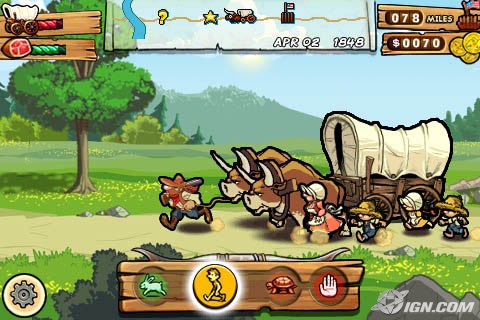
Lastly, the internet, as well as advancements in hard-drive space and graphics rendering shot down the first and ultimate RPG games ... Snake and Oregon Trail. Where did these classics go? and Why aren't we still playing them?

Okay, that last paragraph was a bit of a vent-ful rant. But really, the internet isn't quite killing our children. It is however changing the way things work with communication, socializing, information sharing, etc.